

The booming data-center AI business overshadows a broader processor market enduring a cyclical downturn and long-term negative trends. Addressing the latter first, high-performance embedded processors are no longer a hot topic. Standalone pure-play suppliers are gone, and bigger companies no longer report their embedded businesses’ revenue. The twenty years beginning with the nineties telecom boom saw rapid product development that ended with 5G cellular’s maturation. Moreover, Intel’s 5G-related offerings altered the competitive landscape to the industry’s detriment.
Outside of Communications, the biggest embedded vertical markets are Automotive and Industrial. The latter is a catch-all term for markets other than the Four Cs (cars, computing, communications, and consumer electronics). Whereas high-performance chips account for most embedded-processing sales to the comm sector, auto and industrial customers drive sales of lower-cost chips, including microcontrollers (MCUs). Thus, we can proxy the broader auto and industrial embedded business with MCU sales.
Microcontrollers’ Downward Trend
Those sales have not been good. In 2025, MCU suppliers are still affected by Covid. The pandemic created a standing wave in the market: sales plunged and then zoomed, resulting in panic buying. Once the panic subsided, customers bought less to burn off inventory, a trend exacerbated by an economic slowdown fueled by inflation caused by reckless government fiscal policies and consequent rising interest rates.
Microcontroller sales peaked in about 3Q23, as Figure 1 shows. Last quarter could be the trough. We estimate sales will increase in 2Q25, but the trade war casts a shadow of uncertainty. Moreover, semiconductor inventories are bonkers. Microchip and Texas Instruments both reported 240 days of inventory; nominally, they could shut down manufacturing for eight months and still fulfill every order. At least if another pandemic-era capacity crunch hits, they’re prepared.
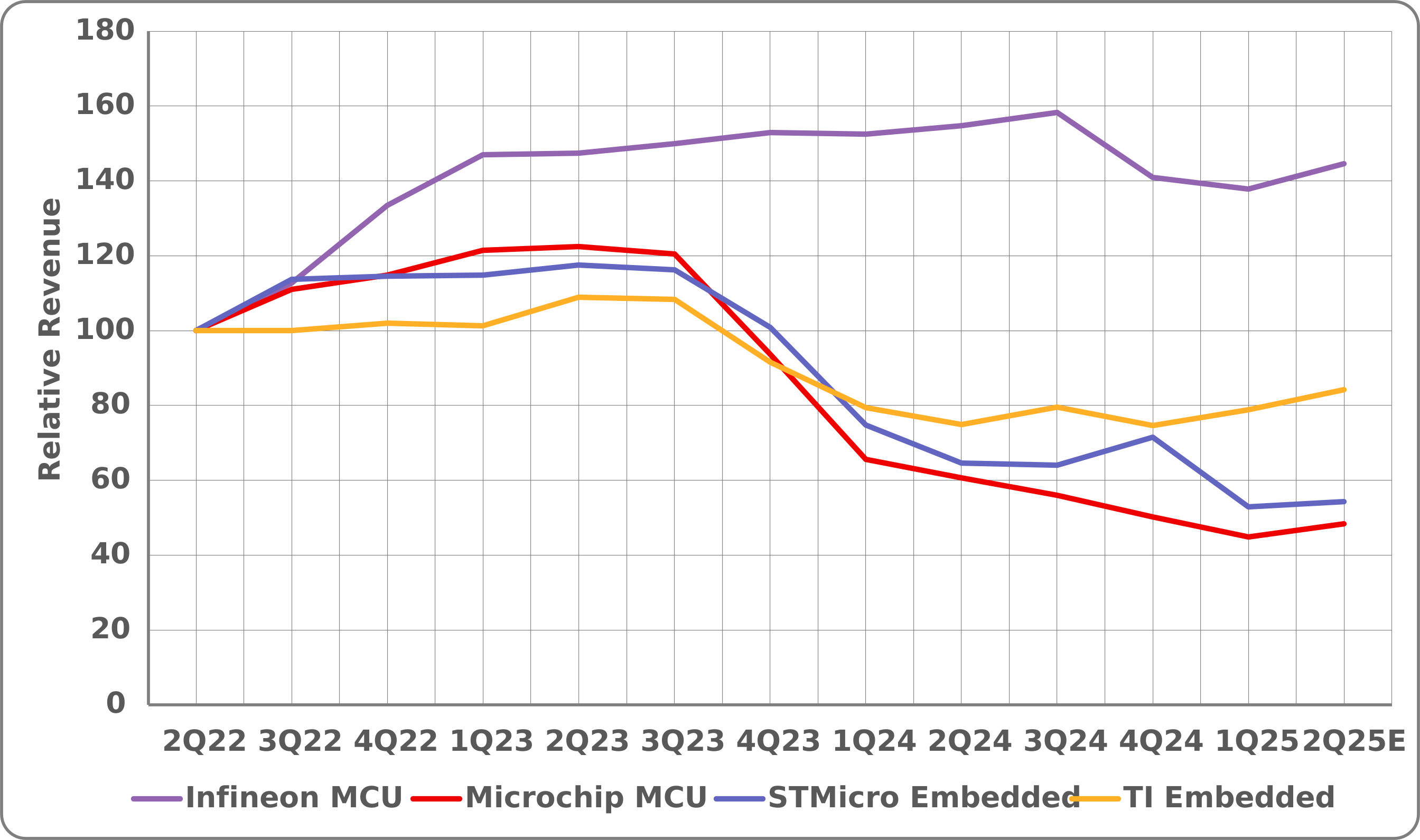
Infineon and TI are among the better-faring MCU companies. Both have strong automotive businesses. Infineon stands out for share gains that enabled it to defer by a year the downturn competitors saw. New products softened the cycle for TI, which is also bringing some manufacturing in house, alleviating customers’ availability concerns and hurting or helping TI’s finances, depending on how full it can keep its fabs.
The MCU business affords good visibility. During the past three years, the four companies accurately projected next-quarter sales in their earnings calls. Orders arrive far enough in advance that they should be able to anticipate sales two or more quarters ahead. Considering such foresight, high inventories, stale product lines, and operational problems are even more concerning.
Bottom Line
Semiconductor product markets once rose and fell in unison but no longer. Prosperity is here; it’s just not evenly distributed. AI-processor (NPU/GPU) sales are expanding like a blister in the sun, but other processor markets are coupled to overall economic trends. For the past two years, MCU sales have slid. If the global economy stabilizes, they may return to growth—a big if.