
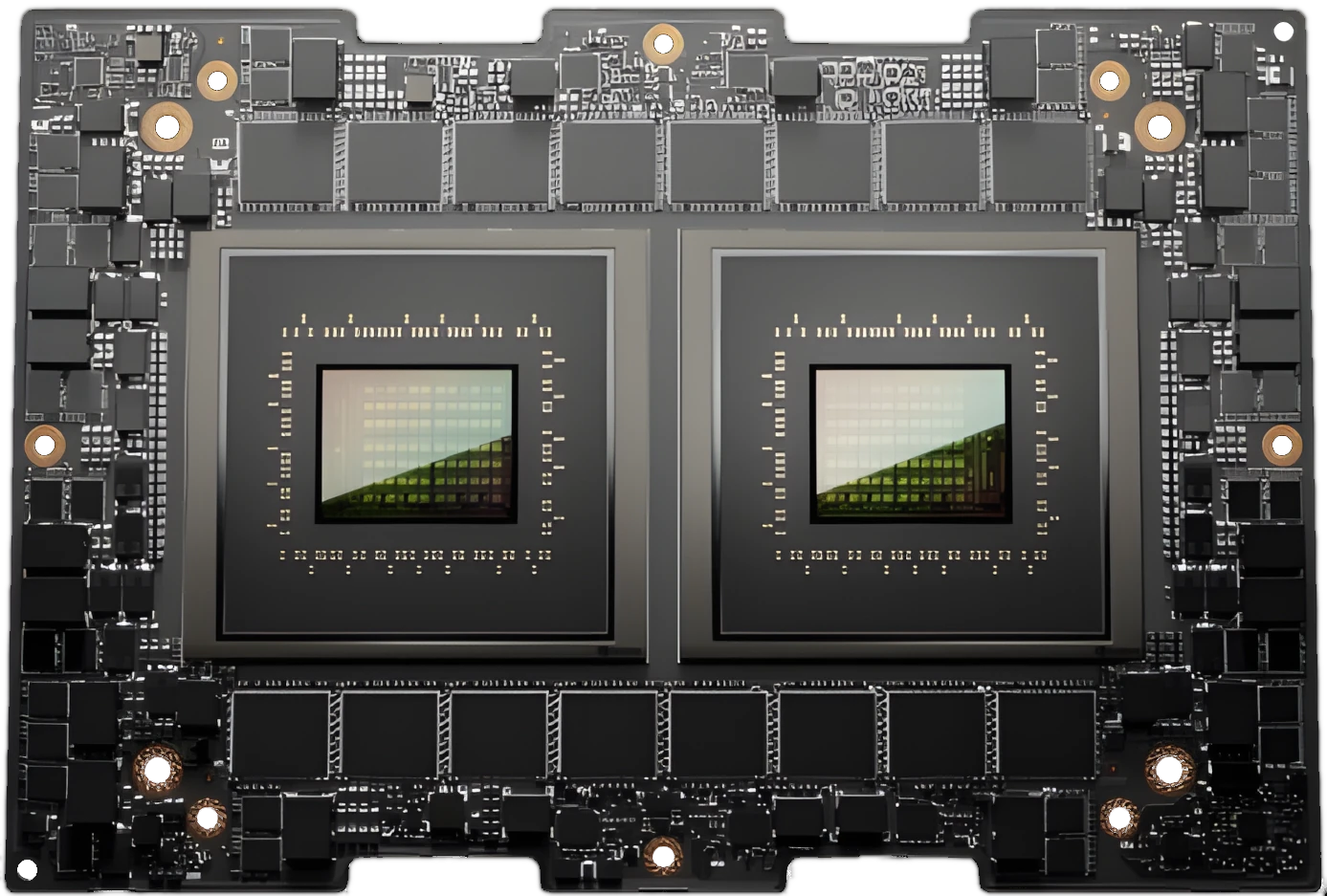
Meta and Nvidia have embarked on an expansive partnership covering Ethernet switches, GPUs for accelerated AI, AI model development, confidential computing, and CPUs. The lattermost element is Nvidia’s first large-scale Grace-only deployment, and the arrangement includes collaborating on a future Vera-only deployment.
What Is Grace?
Grace is an Arm-based processor heretofore paired with Hopper or Blackwell GPUs. (Grace Hopper was a pioneering computer scientist.) To be overly glib, Grace is a glorified DMA controller. To overcome GPUs’ memory-capacity limits, Grace shovels data from its larger DRAM to Hopper/Blackwell (and vice versa). Critical to this role, the processor features a wide (i.e., high-bandwidth) LPDDR5X interface and a coherent NVLink chip-to-chip interface for GPU connectivity.
On traditional metrics, Grace’s Arm Neoverse V2 CPUs can match the performance and power efficiency of AMD Epyc processors in some cases, but Epyc doesn’t integrate NVLink. Future Intel Xeons will have NVLink to allow Nvidia to cater to GPU customers requiring an x86 host. Implementing a proprietary microarchitecture instead of integrating Arm Neoverse V3 cores, Nvidia’s forthcoming Vera processor may close the performance gap.
When it introduced Grace, Nvidia discussed OEMs and ODMs employing it in servers. Arm-based processors have gained traction among hyperscalers, but Amazon Graviton, Microsoft Cobalt, and Google Axion are all proprietary designs. Merchant-market Arm servers, such as those using Ampere’s chips, haven’t found purchase.
Why Should Meta Deploy Grace?
Meta has multiple potential reasons to adopt Grace:
- Nvidia GPUs are in short supply, motivating Meta to curry favor. A time-tested strategy for obtaining a bigger allocation from a semiconductor supplier is to buy more chips from it.
- Fab capacity is constrained. Intel’s 1Q26 revenue, for example, will fall short owing to limited wafer supply. For Meta, the 4 nm Grace may relieve backlogged server-processor orders.
- Meta may be at the start of a long-term plan to join other hyperscalers in deploying Arm server processors, and Grace allows the company to begin adopting the architecture before committing to a custom design.
- Alternatively, Vera could be compelling to Meta, possibly surpassing competing server processors’ performance, power efficiency, and cost effectiveness or providing other advantages. As above, Grace helps Meta prepare for wide-scale Vera adoption.
Bottom Line
Years after its initial promise of addressing the server-processor market with Grace, Nvidia has landed its first major customer. Nvidia hasn’t suffered from failing to supply general-purpose servers, but winning a share of the market will put the company in a stronger position in the data-center semiconductor market. Despite its MTIA AI accelerator, Meta depends on Nvidia for its AI infrastructure. Given the chipmaker’s leadership, the social-media behemoth has selected a capable partner.