
-
As Gelsinger Departs Intel, Manufacturing Issues Remain

Pat Gelsinger revitalized Intel’s chipmaking prowess and product competitiveness, but manufacturing problems loom large as the company burns cash. continue reading
-
Graphene Wiring in CMOS Arrives at Destination 2D

Startup Destination 2D is developing intercalation-doped multilayer graphene (MLG) to replace copper in CMOS chips. To make MLG compatible with CMOS fabrication, the company developed equipment to grow it at 300°C. continue reading
-
Raspberry Pi Compute Module 5 Targets Industrial Systems

The Raspberry Pi shows what’s possible when a software community backs a conveniently sized, low-cost board with the right mix of peripherals and interfaces. From $45 boards to $45,000 GPUs, software and a developer community are essential to a processor’s success. continue reading
-
Microsoft Unveils Custom HSM, DPU, and HBM-Powered Epyc Chips
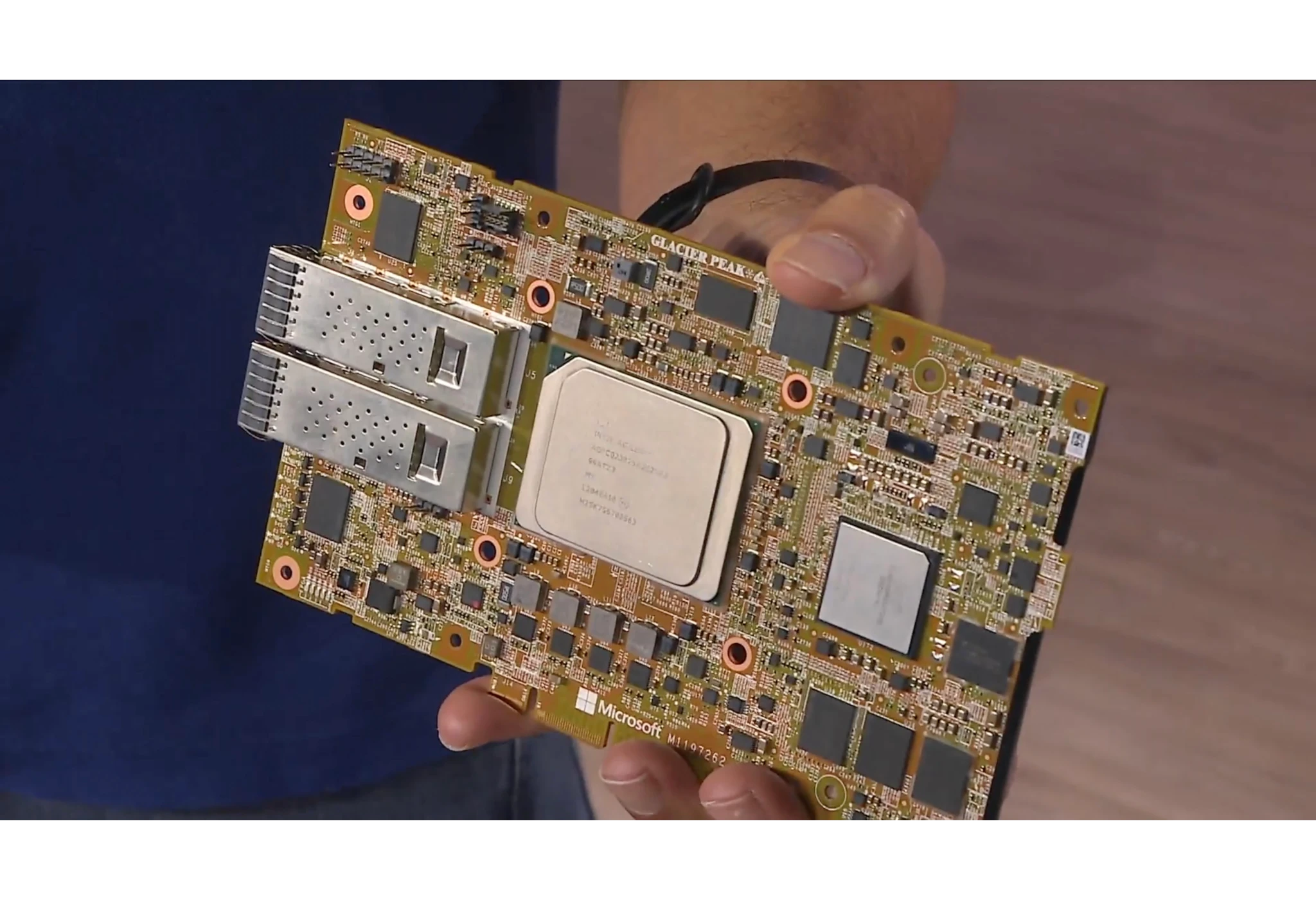
Microsoft has announced a series of custom chips, highlighting the trend of hyperscalers developing their own hardware to gain a competitive edge. The new chips include a hardware security module (HSM), data processing unit (DPU), and an HBM-enabled AMD Epyc processor. continue reading
-
3Q24 Processor Market: Prosperity is Here; It’s Just Not Evenly Distributed

On the back of rising Epyc sales and a strengthening MI300 outlook, AMD surpassed Intel in the data center. The PC market did well in Q3, but the embedded market didn’t meet expectations. continue reading
-
Nvidia Recommits to HPC with H200 NVL and GB200 NVL4

Nvidia has announced two new hardware offerings for high-performance computing: the H200 NVL PCIe card and the GB200 NVL4 superchip leveraging NVLink. Nvidia’s continued focus on HPC underscores its commitment to serving the needs of researchers and enterprise developers. continue reading
Popular
Sponsored Content and Plugs
- BWR 12: The Memory Episode
- Slash Server Costs Without Hardware or Software Changes
- Ceva Boosts NeuPro-M NPU Throughput and Efficiency
- MEXT Helps IT Leaders Find the Sweet Spot
- Chips Act Backs Chiplets
Other Sites You Might Like
Read More
Amazon AMD Arm auto Broadcom business Cerebras Ceva CPU data center DPU DSP edge AI embedded FPGA Google GPU Groq IBM Imagination industrial Intel interconnect Marvell MCU MediaTek memory Meta MEXT Microsoft MLPerf NPU (AI accelerator) Nvidia OpenAI PC process tech Qualcomm RISC-V SambaNova smartphone SoftBank software Tensordyne Tenstorrent Upscale