
-
Please Welcome New XPU-Family Additions

I’m pleased to announce two new members of the XPU.pub family. To provide headlines beyond XPU.pub posts and a discussion forum, I’m introducing XPU.news. It’s a site organized like Hacker News and focused on processors. Please register, submit links, and discuss your ideas. (Your browser will probably throw a security warning the first time you… continue reading
-
Tenstorrent Connects to Developers Through Wormhole
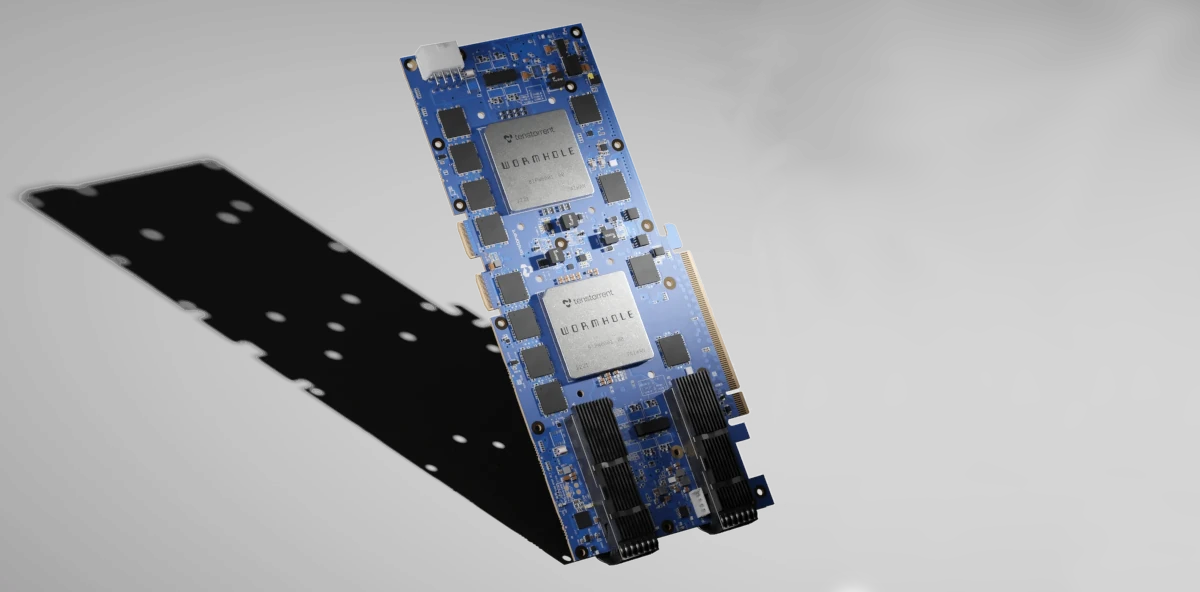
Tenstorrent’s new Wormhole AI accelerator (NPU) is a development platform like its predecessor. Among upgrades to the earlier Grayskull, Wormhole adds Ethernet for chip-to-chip interconnect. It should helps Tenstorrent develop an ecosystem for a next-generation NPU. continue reading
-
Reliability Plagues Intel as Raptor Defects Emerge

CPU instability indicates Intel’s 13th and 14th Generation Core (Raptor Lake) processors have defects affecting reliability. How the company addresses the problem will tarnish or burnish its reputation. continue reading
-
What Do You Want to See from XPU.pub?
Thanks for reading this and my other notes. Extra gratitude to those who have signed up for my newsletter. Looking at the list, I think I know half of you! Here’s a hint at what I’m planning to do next and a request for you to send me ideas. continue reading
-
AMD Zen 5 Raises IPC, Speeds up Math and AI Processing

AMD’s new Zen 5 CPU boasts a 16% IPC increase over Zen 4, with significant performance gains in math-intensive tasks owing to doubled AVX throughput. A tighter physical design allows for similar die size despite increased cache and wider execution units. The new microarchitecture widens both the front end and back end and will be… continue reading
-
Why Should MediaTek Enter Server CPU and NPU Market?

MediaTek is developing an Arm-based server processor and an associated data-center AI accelerator (NPU) according to Taiwan’s Economic Daily (經濟日報). The thinly sourced article states the TSMC-fabbed 3 nm chips will begin production in 2H25. But is the story believable? continue reading
Popular
Sponsored Content and Plugs
- BWR 12: The Memory Episode
- Slash Server Costs Without Hardware or Software Changes
- Ceva Boosts NeuPro-M NPU Throughput and Efficiency
- MEXT Helps IT Leaders Find the Sweet Spot
- Chips Act Backs Chiplets
Other Sites You Might Like
Read More
Amazon AMD Arm auto Broadcom business Cerebras Ceva CPU data center DPU DSP edge AI embedded FPGA Google GPU Groq IBM Imagination industrial Intel interconnect Marvell MCU MediaTek memory Meta MEXT Microsoft MLPerf NPU (AI accelerator) Nvidia OpenAI PC process tech Qualcomm RISC-V SambaNova smartphone SoftBank software Tensordyne Tenstorrent Upscale